The Mystic Estate journal
How to Prepare Your Home for a Miniature Poodle Puppy
Mystic Estate · July 15, 2026
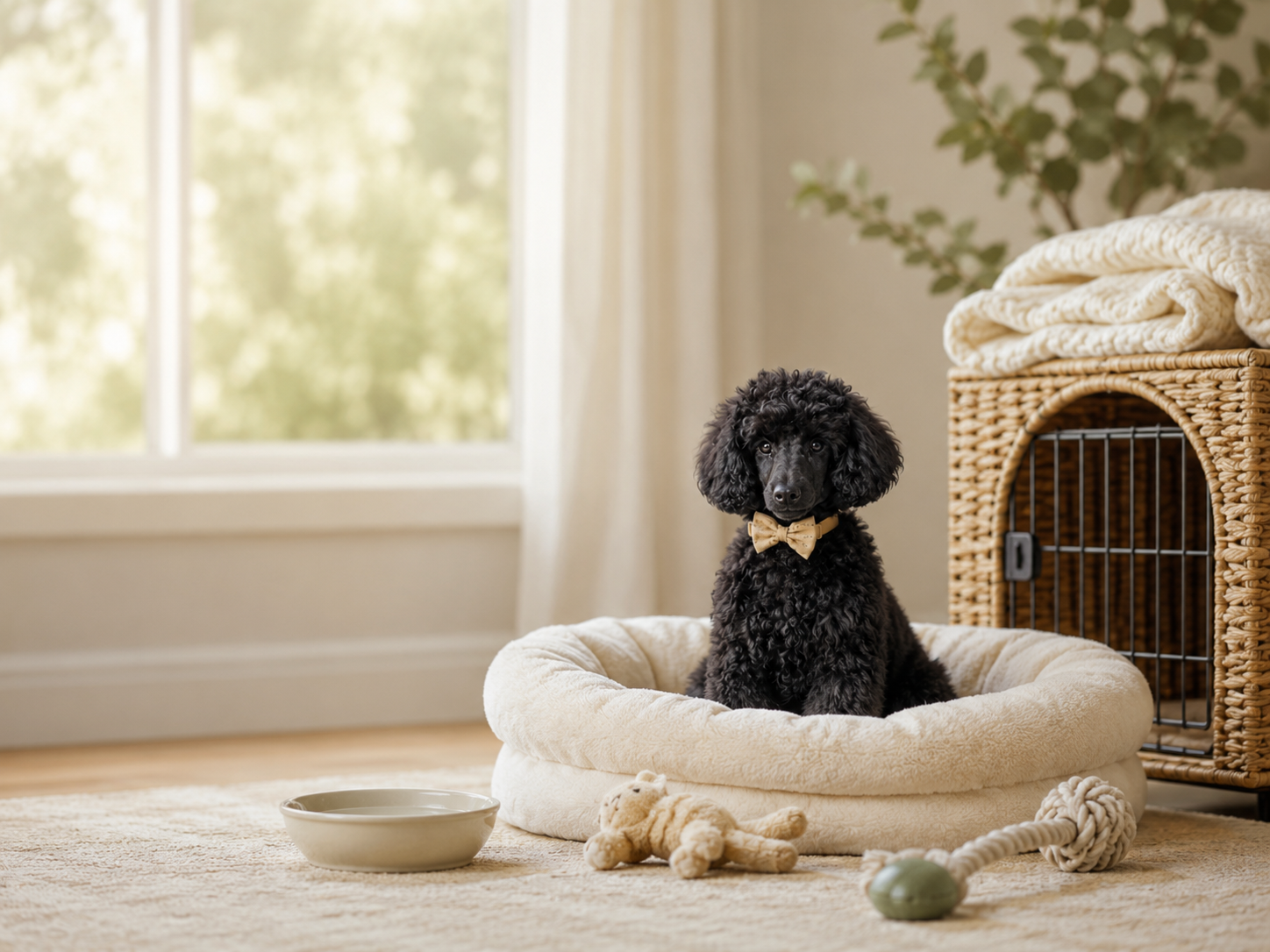
Bringing home a Miniature Poodle puppy is joyful, tender, and a little bit busy. The goal is not to create a perfect showroom before your puppy arrives. It is to make the first days feel safe, predictable, and easy to navigate for a bright young dog who is experiencing an entirely new world.
When you prepare your home for a Miniature Poodle puppy, focus on three things: prevent access to hazards, create one calm home base, and agree on simple household routines. A thoughtful setup helps you spend less time moving shoes and searching for supplies—and more time building trust.
How to prepare your home for a Miniature Poodle puppy: the short version
- Create a gated puppy zone with a crate or pen, water, a washable resting surface, and a few safe toys.
- Puppy-proof every area your puppy can reach, including cords, medications, cleaners, trash, small objects, plants, doors, and blind cords.
- Choose one easy-to-reach potty spot and plan the route you will use day and night.
- Place food, grooming, cleanup, and walking supplies where adults can reach them quickly but a puppy cannot.
- Decide house rules and divide first-week responsibilities before pickup day.
- Keep the first day quiet, introduce the home gradually, and protect plenty of time for sleep.
The American Kennel Club’s puppy-proofing guidance recommends securing cords, medications, cleaning products, trash, small objects, sharp tools, doors, windows, and potentially harmful plants. The American Veterinary Medical Association’s household-hazards guide offers a useful second check for ordinary items that can become dangerous to a curious pet.
Start with one calm puppy zone
A new puppy does not need access to the whole house. In fact, a smaller supervised area is often kinder. It gives your puppy a clear place to eat, play, settle, and learn while helping you notice early signals that a potty break is needed.
Choose a room or section of a room near everyday family life—not an isolated corner where your puppy will feel forgotten. A kitchen, breakfast nook, or living-room edge can work well when it has a washable floor, comfortable temperature, and enough space for a pen or gate.
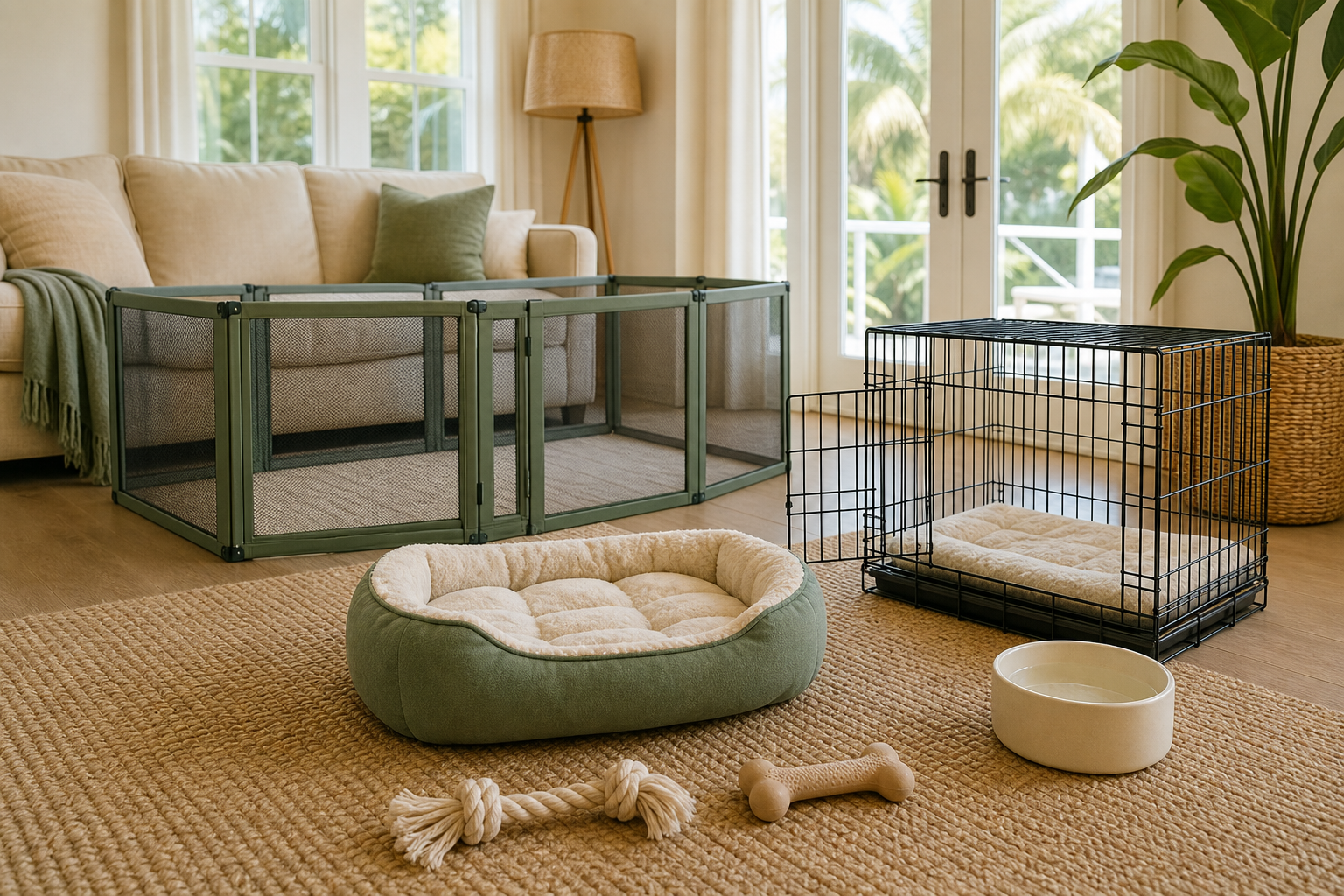
Set up the zone with:
- An appropriately sized crate or secure puppy pen
- A flat, washable resting surface that can be removed if your puppy tries to chew it
- A stable water bowl
- Two or three puppy-safe toys with different textures
- A treat container stored out of reach
- A leash and waste bags near the exit
- An enzymatic cleaner and paper towels in a high cabinet
- A baby gate if the room itself is the puppy area
Think of management as quiet guidance, not punishment. The AKC notes that a puppy-proofed room, crate, or pen can prevent unsafe exploration when direct supervision is not possible. Build positive associations by pairing the space with calm attention, safe enrichment, and rest.
Puppy-proof at nose level, room by room
Walk through the home once at adult height, then again from a puppy’s point of view. Look beneath furniture, behind curtains, beside charging stations, and under low shelves. Miniature Poodle puppies are compact, observant, and quick; if an object can be reached, pulled, chewed, or swallowed, assume it will be investigated.
Kitchen and laundry areas
- Lock away cleaners, detergents, medications, supplements, and pest-control products.
- Use a lidded or secured trash can.
- Keep food, grocery bags, dishwasher pods, sponges, and sharp utensils off low surfaces.
- Block access behind appliances and keep appliance doors closed.
- Store pet food and treats where your puppy cannot help themselves.
Living room and home office
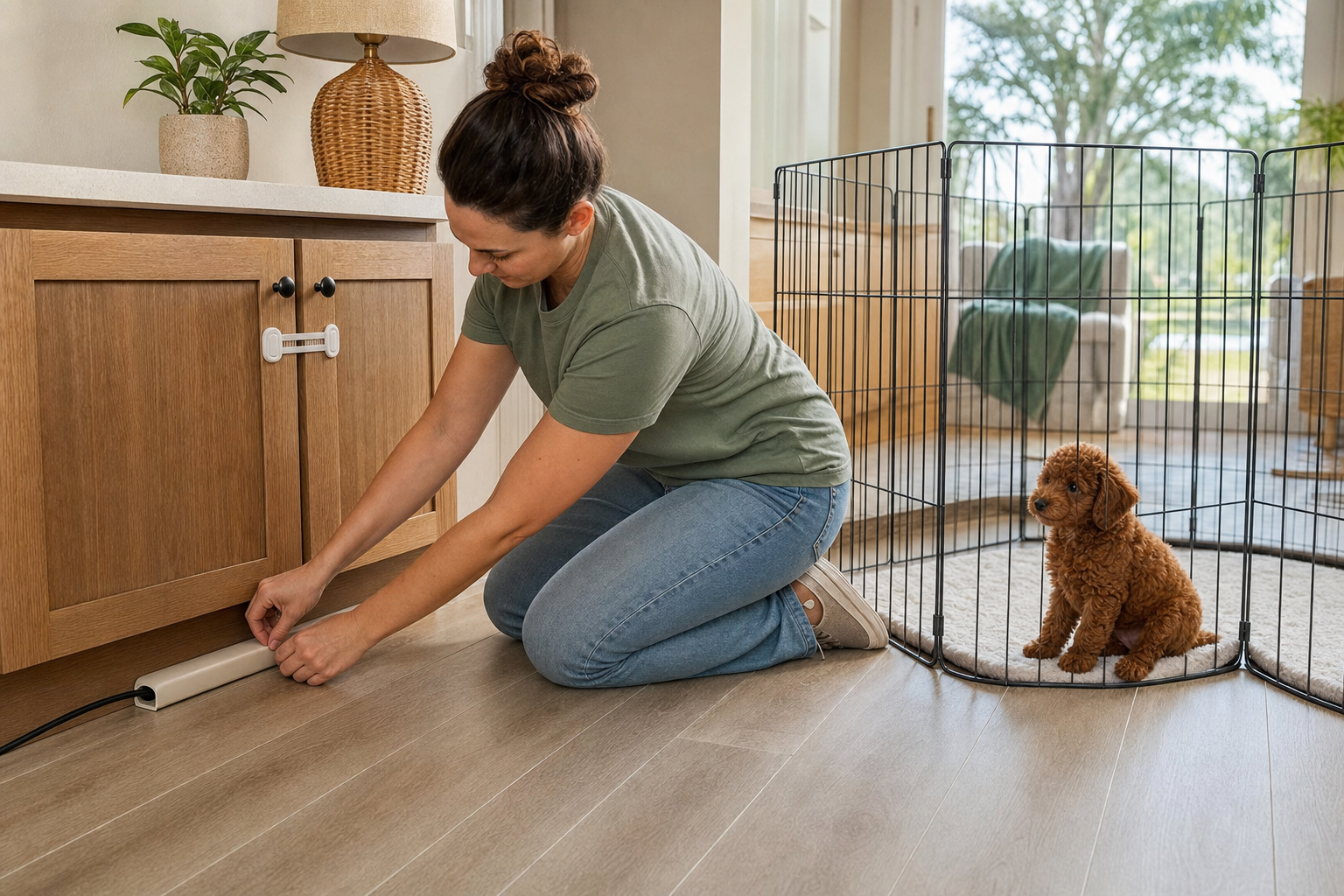
- Route electrical and charging cords through cord covers or completely out of reach.
- Pick up remote controls, batteries, earbuds, children’s toys, coins, hair ties, and craft supplies.
- Secure blind and curtain cords.
- Move breakable objects and books from low shelves.
- Check recliners and sofa mechanisms before operating them.
Bedrooms and bathrooms
- Put shoes, socks, laundry, jewelry, razors, and cosmetics behind closed doors.
- Keep all medications in secure cabinets rather than on counters or nightstands.
- Close toilet lids and empty bathtubs after use.
- Remove small rugs temporarily if they are too tempting to chew or repeatedly confuse house-training.
Garage, patio, yard, and pool
- Secure tools, automotive fluids, fertilizers, pesticides, and lawn chemicals.
- Inspect gates and fencing for openings a small puppy could squeeze through.
- Remove or block access to potentially toxic plants.
- Use a physical barrier around a pool and supervise every outdoor visit.
- Choose a shaded potty area and keep cool water available during Florida heat.
Supervision matters: Young puppies should not be left outside alone. Supervision protects them from heat, plants, wildlife, gaps in fencing, and the many objects they may decide to taste.
Prepare a grooming station before your puppy arrives
Coat care is part of daily life with a Miniature Poodle, and the earliest experiences should feel gentle and ordinary. You do not need to perform a complete grooming session on the first day. You do need a safe place where brief handling practice can become routine.
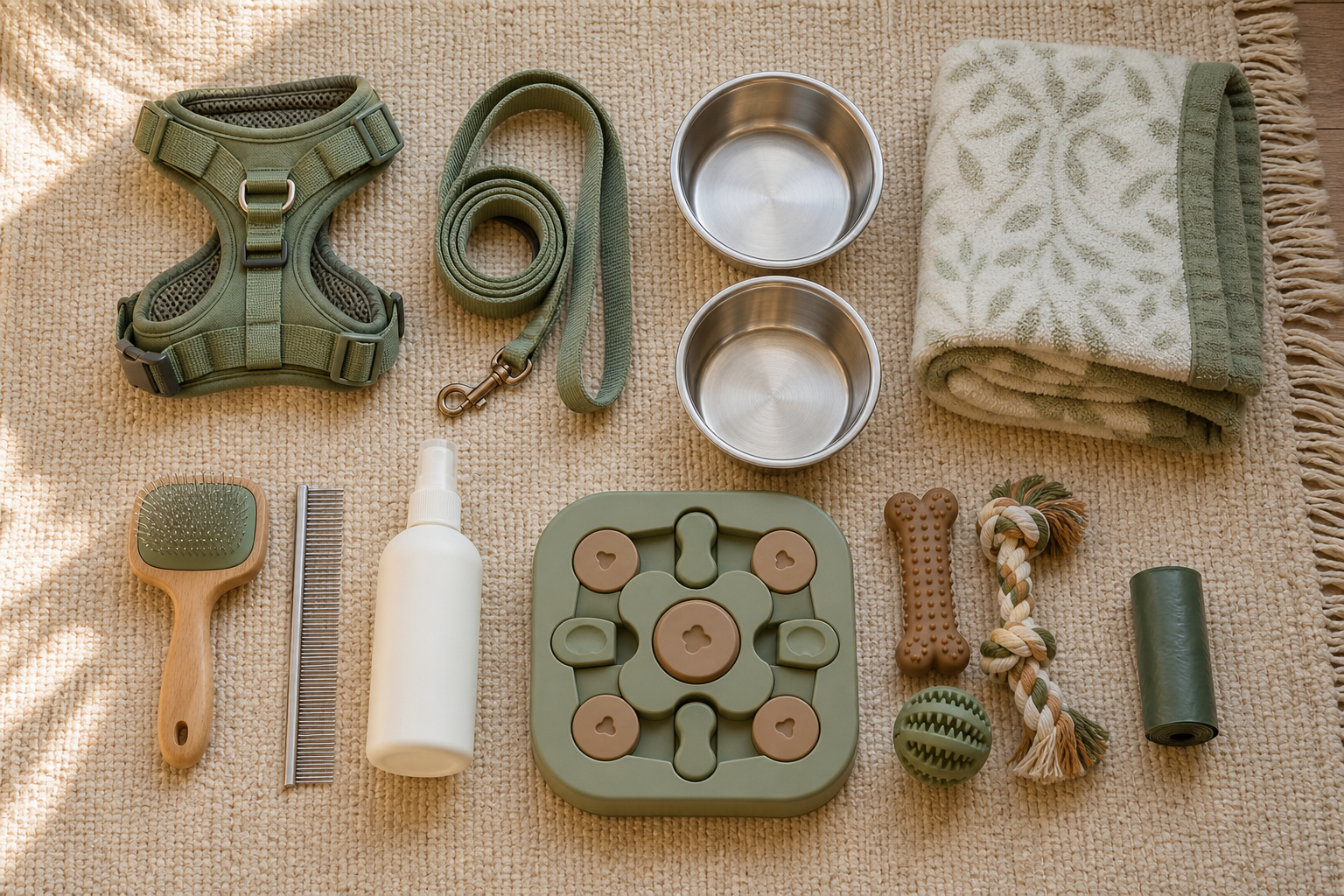
Choose a bright, nonslip area and gather only the tools recommended for your puppy’s current coat. Your starter kit may include a breeder-approved brush and metal comb, nail-care supplies, puppy-appropriate shampoo, clean towels, and small rewards. Store everything out of reach between sessions.
Begin with seconds, not minutes: touch a paw, briefly lift an ear flap, stroke the muzzle, or make one calm pass with the brush, then reward and stop. Mystic Estate’s approach is shaped by Helen’s professional grooming experience; you can meet Helen and learn how grooming confidence begins at home .
Choose supplies that solve real needs
Puppy shopping can become surprisingly elaborate. Start with a practical first-week kit and wait to learn your puppy’s preferences before buying multiples of everything.
- Containment An appropriately sized crate, a secure pen, and one or two sturdy gates
- Walking A properly fitted collar or harness, identification tag, lightweight leash, and waste bags
- Meals Stable food and water bowls, the food your breeder recommends, and a measuring cup used only for puppy food
- Rest One or two washable bedding options rather than an entire collection
- Enrichment A small rotation of size-appropriate toys and safe chews
- Cleanup Enzymatic cleaner, paper towels, washable cloths, and a covered waste bin
- Grooming Breeder-recommended coat tools, towels, and puppy-safe care products
- Travel A secure carrier, crate, or vehicle restraint suited to your puppy’s size
Inspect toys and chews regularly, and remove anything that is breaking apart or becoming small enough to swallow. When in doubt, ask your breeder or veterinarian whether an item is appropriate for your puppy’s age and size.
Plan feeding and food storage
Ask your breeder for the puppy’s current food, measured amount, meal times, and any feeding notes before pickup. Write the plan down so every caregiver follows the same routine. If you are considering a food change, discuss the timing and transition with your veterinarian rather than improvising during an already significant adjustment.
The U.S. Food and Drug Administration recommends keeping pet food in its original bag or placing the entire bag inside a clean, dry storage container. That preserves the product name, lot number, and best-by date if a recall or quality concern arises. Store food and treats in a cool, dry, secure place, and wash food bowls and measuring tools after use.
Create a first-week household plan
A simple written plan prevents tired humans from making five different decisions at midnight. Agree on:
- The potty route: which door, which outdoor spot, and which cue everyone will use
- The sleep setup: where the crate will be at night and who handles overnight potty trips
- House rules: furniture access, rooms that are off-limits, and how the family will respond to jumping or nipping
- Meal responsibility: who measures each meal and records that it was given
- Supervision: which adult is responsible during each part of the day
- Appointments: your veterinary visit, grooming plan, and any breeder check-ins
- Emergency information: your veterinarian, nearest emergency veterinary clinic, breeder contact, and the puppy’s records in one easy-to-find place
Consistency does not require perfection. It simply means the puppy receives the same clear, gentle message from every person in the home.
Prepare children and resident pets
Before pickup day, teach children to sit quietly and let the puppy approach. Show them how to offer an open hand, stroke gently, and recognize when the puppy is moving away to rest. Adults should supervise every interaction and protect the puppy’s crate or bed as a child-free resting space.
Plan resident-pet introductions rather than allowing a surprise meeting in the doorway. The AKC’s first-day guidance for a new puppy recommends calm, gradual introductions and limiting the puppy to a designated area before opening the rest of the home. Keep bowls, beds, and prized toys separate at first, and give every animal room to step away.
Make homecoming day intentionally small
- Take your puppy directly to the chosen potty area before going indoors.
- Introduce the puppy zone and one nearby room, not the entire house.
- Offer water and follow the breeder’s familiar meal schedule.
- Keep greetings quiet and limit visitors.
- Alternate brief play or exploration with frequent potty opportunities.
- Protect long, undisturbed naps.
- End the evening with a calm routine and a final potty trip.
Your puppy may be curious, sleepy, cautious, busy, or all four within an hour. None of these first-day moods predicts the adult dog. Give the puppy time to observe and recover from the trip.
Florida-specific arrival preparation
Florida families should make heat planning part of the home setup. Choose the coolest practical route to the potty area, provide shade, keep water ready, and make outdoor trips purposeful during hot or humid periods. Check patios and walking surfaces before placing a puppy on them, and use indoor enrichment when conditions are uncomfortable.
Also walk the yard after storms. Look for fallen branches, mushrooms, standing water, displaced wildlife, gaps under gates, and lawn treatments. For more breed-specific planning, read our Miniature Poodle breed guide .
Your 48-hour countdown checklist
Two days before pickup
- Finish puppy-proofing and ask another adult to inspect your work.
- Set up the crate, pen, bowls, and potty exit.
- Wash new bowls and washable bedding.
- Confirm the food plan, pickup time, and records you will receive.
- Save veterinary and emergency contacts.
- Clear your schedule as much as possible for the first day.
The morning your puppy comes home
- Remove last-minute floor clutter and close off unused rooms.
- Check the yard, gate latches, pool barrier, and temperature.
- Place leash, treats, and cleanup supplies by the door.
- Set out fresh water.
- Ask family members to keep the arrival calm and unhurried.
Questions families often ask
Select a question below to read the answer.
Where should the crate go on the first night?Many families place the crate near the bed during the first nights. This helps prevent the puppy from feeling isolated and makes nighttime potty needs easier to notice. Choose a quiet, temperature-controlled location and keep the nighttime routine calm and consistent.
Should a puppy have access to the whole house?No. Begin with one safe zone. Expand access gradually as house-training, chewing habits, and supervision allow. More freedom should follow reliability rather than precede it.
How early should grooming practice begin?Gentle handling can begin right away in very short, positive moments. Follow your breeder’s coat-care guidance, keep sessions easy, and stop before the puppy becomes overwhelmed.
What should I do if my puppy chews the bed?Remove the bed before loose material can be swallowed. Offer a safer resting surface, supervise the puppy, and redirect chewing to an appropriate toy. Ask your breeder or veterinarian if the behavior is persistent or concerning.
When should I schedule the first veterinary visit?Arrange the appointment before pickup. Follow the timing recommended by your breeder and veterinarian. Bring the puppy’s health, vaccination, deworming, microchip, and feeding records so your veterinary team has the complete picture.
A prepared home leaves more room for connection
The best puppy setup is not the most expensive one. It is the home where hazards are secured, rest is protected, expectations are clear, and people are ready to respond with patience. That kind of preparation gives a Miniature Poodle puppy room to settle, learn, and show you who they are.
If you are preparing for a future puppy, explore Mystic Estate’s available and upcoming puppies , learn about our home-raised approach , or contact Helen with your questions . When the fit feels right, you can also apply for a Mystic Estate puppy .
Trusted puppy-preparation resources
Ready for the next step?